
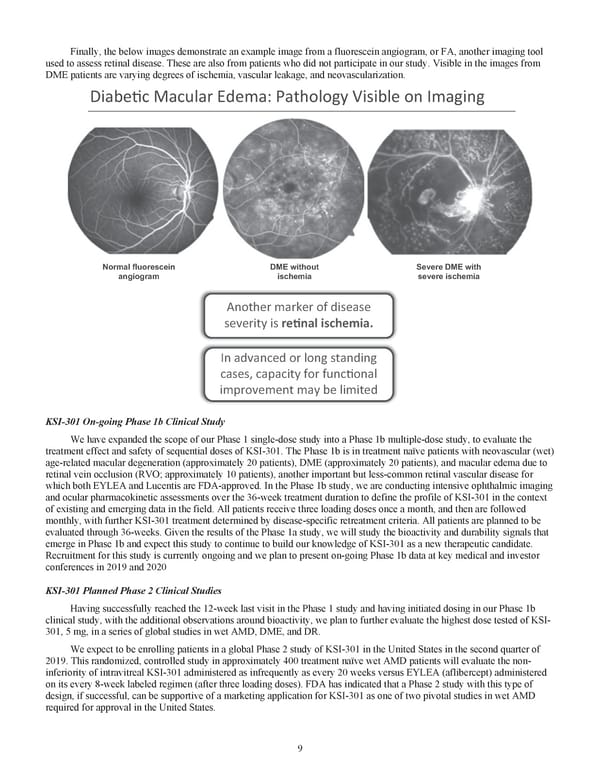
9 Finally, the below images demonstrate an example image from a fluorescein angiogram, or FA, another imaging tool used to assess retinal disease. These are also from patients who did not participate in our study. Visible in the images from DME patients are varying degrees of ischemia, vascular leakage, and neovascularization. KSI-301 On-going Phase 1b Clinical Study We have expanded the scope of our Phase 1 single-dose study into a Phase 1b multiple-dose study, to evaluate the treatment effect and safety of sequential doses of KSI-301. The Phase 1b is in treatment naïve patients with neovascular (wet) age-related macular degeneration (approximately 20 patients), DME (approximately 20 patients), and macular edema due to retinal vein occlusion (RVO; approximately 10 patients), another important but less-common retinal vascular disease for which both EYLEA and Lucentis are FDA-approved. In the Phase 1b study, we are conducting intensive ophthalmic imaging and ocular pharmacokinetic assessments over the 36-week treatment duration to define the profile of KSI-301 in the context of existing and emerging data in the field. All patients receive three loading doses once a month, and then are followed monthly, with further KSI-301 treatment determined by disease-specific retreatment criteria. All patients are planned to be evaluated through 36-weeks. Given the results of the Phase 1a study, we will study the bioactivity and durability signals that emerge in Phase 1b and expect this study to continue to build our knowledge of KSI-301 as a new therapeutic candidate. Recruitment for this study is currently ongoing and we plan to present on-going Phase 1b data at key medical and investor conferences in 2019 and 2020 KSI-301 Planned Phase 2 Clinical Studies Having successfully reached the 12-week last visit in the Phase 1 study and having initiated dosing in our Phase 1b clinical study, with the additional observations around bioactivity, we plan to further evaluate the highest dose tested of KSI- 301, 5 mg, in a series of global studies in wet AMD, DME, and DR. We expect to be enrolling patients in a global Phase 2 study of KSI-301 in the United States in the second quarter of 2019. This randomized, controlled study in approximately 400 treatment naïve wet AMD patients will evaluate the non- inferiority of intravitreal KSI-301 administered as infrequently as every 20 weeks versus EYLEA (aflibercept) administered on its every 8-week labeled regimen (after three loading doses). FDA has indicated that a Phase 2 study with this type of design, if successful, can be supportive of a marketing application for KSI-301 as one of two pivotal studies in wet AMD required for approval in the United States. Diabe�c Macular Edema: Pathology Visible on Imaging Normal fluorescein angiogram Another marker of disease severity is re�nal ischemia. DME without ischemia Severe DME with severe ischemia In advanced or long standing cases, capacity for func�onal improvement may be limited
 Kodiak 2018 Annual Report Page 20 Page 22