
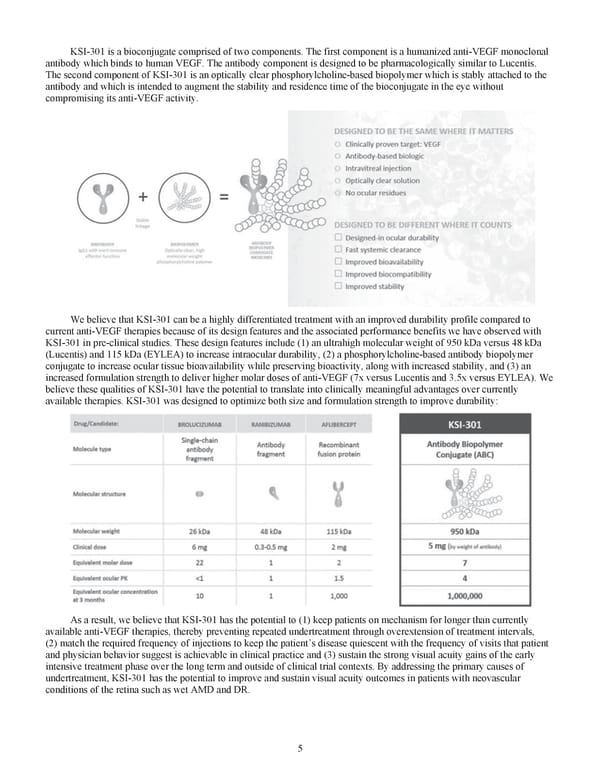
5 KSI-301 is a bioconjugate comprised of two components. The first component is a humanized anti-VEGF monoclonal antibody which binds to human VEGF. The antibody component is designed to be pharmacologically similar to Lucentis. The second component of KSI-301 is an optically clear phosphorylcholine-based biopolymer which is stably attached to the antibody and which is intended to augment the stability and residence time of the bioconjugate in the eye without compromising its anti-VEGF activity. We believe that KSI-301 can be a highly differentiated treatment with an improved durability profile compared to current anti-VEGF therapies because of its design features and the associated performance benefits we have observed with KSI-301 in pre-clinical studies. These design features include (1) an ultrahigh molecular weight of 950 kDa versus 48 kDa (Lucentis) and 115 kDa (EYLEA) to increase intraocular durability, (2) a phosphorylcholine-based antibody biopolymer conjugate to increase ocular tissue bioavailability while preserving bioactivity, along with increased stability, and (3) an increased formulation strength to deliver higher molar doses of anti-VEGF (7x versus Lucentis and 3.5x versus EYLEA). We believe these qualities of KSI-301 have the potential to translate into clinically meaningful advantages over currently available therapies. KSI-301 was designed to optimize both size and formulation strength to improve durability: As a result, we believe that KSI-301 has the potential to (1) keep patients on mechanism for longer than currently available anti-VEGF therapies, thereby preventing repeated undertreatment through overextension of treatment intervals, (2) match the required frequency of injections to keep the patient’s disease quiescent with the frequency of visits that patient and physician behavior suggest is achievable in clinical practice and (3) sustain the strong visual acuity gains of the early intensive treatment phase over the long term and outside of clinical trial contexts. By addressing the primary causes of undertreatment, KSI-301 has the potential to improve and sustain visual acuity outcomes in patients with neovascular conditions of the retina such as wet AMD and DR.
 Kodiak 2018 Annual Report Page 16 Page 18